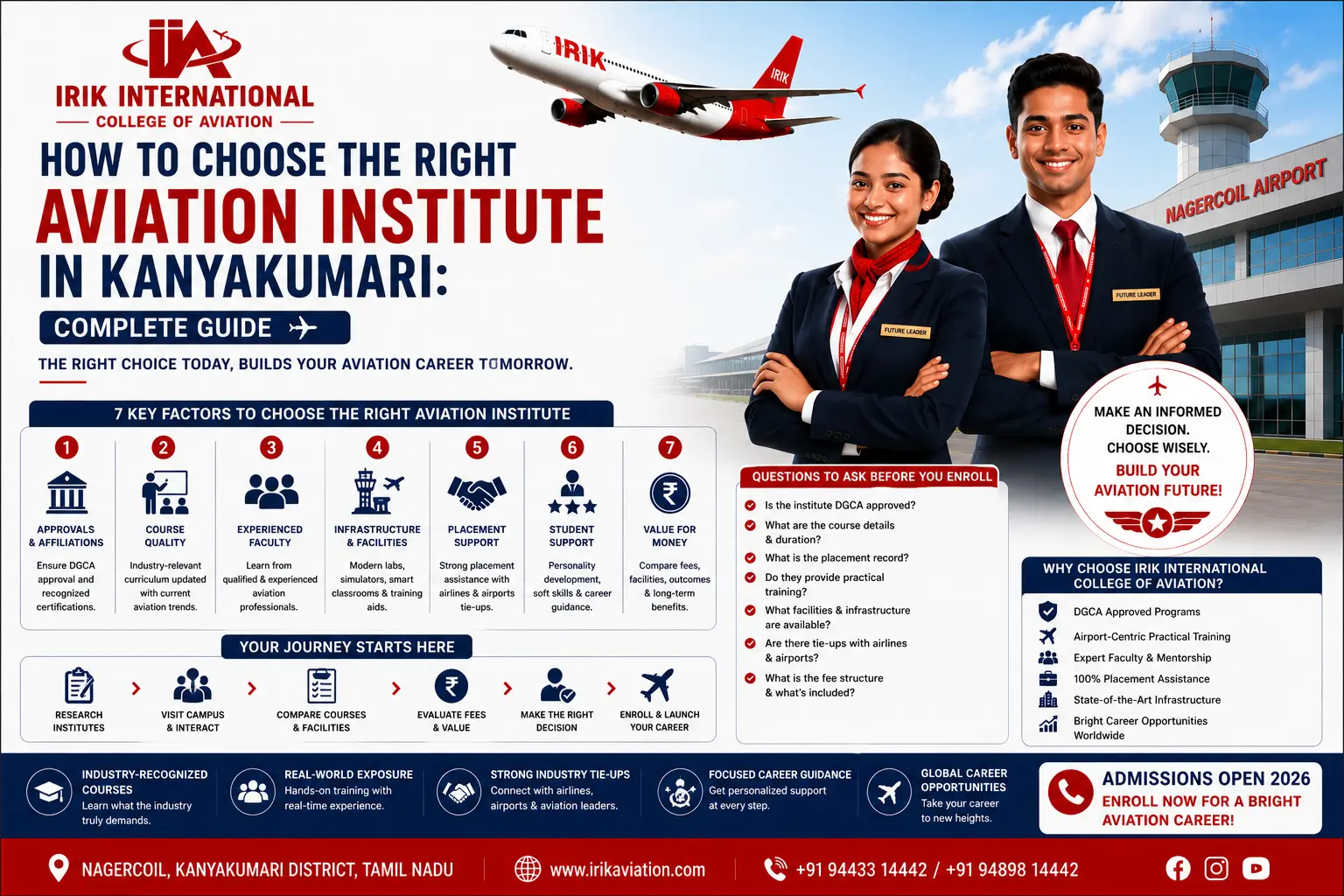
How to Choose the Right Aviation Institute in Kanyakumari: Complete Guide
Selecting the right aviation institute in Kanyakumari is one of the most important decisions you will make for your aviation career. With multiple options available, understanding what to look for can help you make an informed choice that aligns with your goals, budget, and learning style. Factors to Consider When Choosing an Aviation Institute: Accreditation and Recognition: The first step is verifying that the institute is recognized by relevant aviation authorities. Check if the institute has DGCA (Directorate General of Civil Aviation) approval for its programs. Look for international partnerships or certifications that add credibility to the courses. Accreditation ensures that the training meets industry standards and that your certificate will be recognized by employers. Placement Record and Success Rate: Placement is crucial for any aviation course. Ask for verified data on placement rates rather than claimed percentages. Request a list of airlines and companies where recent graduates are employed. Visit the institute's website or contact their placement cell for detailed placement statistics, including salary packages and job roles. An institute with consistent 90%+ placement rates within 30-60 days of graduation is a strong indicator of quality training and industry connections. Faculty Experience and Qualifications: The quality of instruction directly impacts your learning. Inquire about the faculty's industry experience, certifications, and qualifications. Experienced instructors who have worked in airlines, airports, or related aviation sectors bring real-world knowledge to the classroom. Check if faculty members undergo regular training updates to stay current with industry practices. A mix of academic qualifications and practical field experience is ideal. Modern Training Facilities: Aviation training requires hands-on experience with actual or simulated aircraft equipment. Visit the campus to assess facilities including aircraft simulators, flight training equipment, grooming labs, mock aircraft cabins, interview preparation rooms, and computer labs for theoretical training. State-of-the-art equipment ensures you get practical exposure similar to what you will encounter in your career. Infrastructure and Campus Amenities: Beyond training facilities, consider the overall campus infrastructure. Check for comfortable classrooms, library facilities, computer labs, canteen services, recreation areas, and hostel accommodations (if needed). A well-maintained campus with modern amenities contributes to a positive learning experience. Location and Accessibility: Evaluate the institute's location relative to your home. Is it easily accessible by public transport? Consider commute time and travel costs. If the institute offers hostel facilities, check their quality, security measures, and affordability. Some institutes have multiple campuses, giving you flexibility in choosing a convenient location. Course Curriculum and Content: Review the course structure and curriculum. Does it cover all aspects required by airlines and employers? Check if the program includes practical training, personality development, communication skills, and airline interview preparation. Compare course duration and structure with other institutes. A comprehensive curriculum that balances theory and practice is essential. Batch Size and Student-Instructor Ratio: Smaller class sizes allow for more personalized attention. Inquire about the average number of students per batch and the student-to-instructor ratio. Personalized feedback during grooming sessions and interview preparation is valuable for your development. A ratio of 1 instructor per 10-15 students is generally considered ideal for aviation training. Fee Structure and Financial Assistance: Compare fee structures across institutes, but remember that the cheapest option is not always the best. Understand what is included in the fees and what costs extra. Ask about scholarship options, flexible payment plans, or educational loans. Some institutes offer merit-based scholarships for high-achieving students. Transparent fee communication without hidden charges is important. Industry Partnerships and Recruitment Drives: Strong institutes have direct partnerships with major airlines, airports, and hospitality companies. These partnerships often result in campus recruitment drives where airlines conduct selection processes directly at the institute. Ask about which airlines and companies regularly visit the campus for recruitment. This is a significant advantage for securing employment. Student Reviews and Alumni Network: Connect with current students and alumni to get honest feedback. Ask about their learning experience, faculty support, placement assistance, and overall satisfaction. A strong alumni network can provide ongoing support and career opportunities. Alumni success stories are a testament to the institute's quality. Reputation and Track Record: Research the institute's reputation in the aviation industry. How long has it been operating? What is its standing among employers? Check online reviews and ratings, but remember that negative reviews are often more visible than positive ones. An established institute with years of successful graduate placements is generally a safer choice. Curriculum Updates and Industry Relevance: Ensure the institute regularly updates its curriculum to reflect industry changes. Aviation standards, aircraft technology, and airline procedures are constantly evolving. An institute committed to continuous improvement and industry alignment ensures you learn relevant skills. Red Flags to Avoid: Be cautious of institutes that guarantee 100% placement unrealistically, have outdated facilities, lack DGCA approval, make tall claims without supporting data, do not provide clear information about placements, have excessive hidden charges, or show poor campus conditions. Making Your Decision: Create a comparison chart of shortlisted institutes based on the factors above. Visit each campus in person and interact with current students and faculty. Request references from recent graduates and contact them. Compare placement data and alumni salary packages. Consider the overall value for money, not just the fees. Final Thoughts: Choosing an aviation institute is an investment in your future. Take time to research, visit campuses, and gather information before deciding. IRIK International College in Nagercoil, Kanyakumari offers a comprehensive aviation training program with DGCA approval, modern facilities including aircraft simulators, experienced faculty with 15+ years of industry experience, 100% placement support, and direct airline partnerships. With 5000+ successful graduates globally and consistent 95%+ placement rates, IRIK stands out as a premier choice for aviation education in Kanyakumari district. If you are considering aviation training in Kanyakumari, evaluate IRIK alongside other institutes using the criteria above. Contact IRIK today to schedule a campus visit and speak with placement coordinators about verified employment data.
"Choosing the right aviation institute determines your career success. Look for proven placement rates, modern facilities, experienced faculty, and industry partnerships."
Why This Topic Matters
Complete guide to choosing the right aviation institute in Kanyakumari. Compare features, placement rates, faculty, fees, and facilities to make the best decision. Students who understand this topic early can make better course decisions, prepare for the right roles, and build a stronger foundation for long-term career growth.
Key Takeaways
- How To Choose Aviation Institute Kanyakumari
- Best Aviation Institute in Kanyakumari
- Aviation College Comparison Kanyakumari
- Aviation Training Center Near Kanyakumari
Career Opportunities
Aviation-focused students can pursue opportunities in airlines, airports, cargo operations, travel support services, customer relations, and management-oriented roles. A structured course helps create a stronger foundation for both entry-level jobs and long-term industry growth.
How to Choose the Right Course
Before joining any program, students should compare the course syllabus, faculty experience, practical exposure, certification value, and placement support. For students in Kanyakumari district, Nagercoil, Marthandam and nearby local areas, location convenience, trainer support, and placement guidance should also be part of the decision.
Explore Related Courses at IRIK
Ready to start your career? Browse our industry-focused courses and apply today.